Shield
Protection changes the cost of hitting an obstacle. It is not a replacement for landing on solid track. Read the active shield indicator rather than assuming protection lasts for the whole run.
Slope 2 puts a collecting decision inside the downhill run. Open the game below, then decide which blue gems you can reach without turning a clean route into a risky detour.

Ready when you are. The game opens only after Play.
A collectible changes where you want to go. It does not make the platform any wider. In Slope 2, the useful habit is to check the ground beyond a gem before you move toward it. A row that follows your existing route is a much different offer from a single gem sitting near an edge.
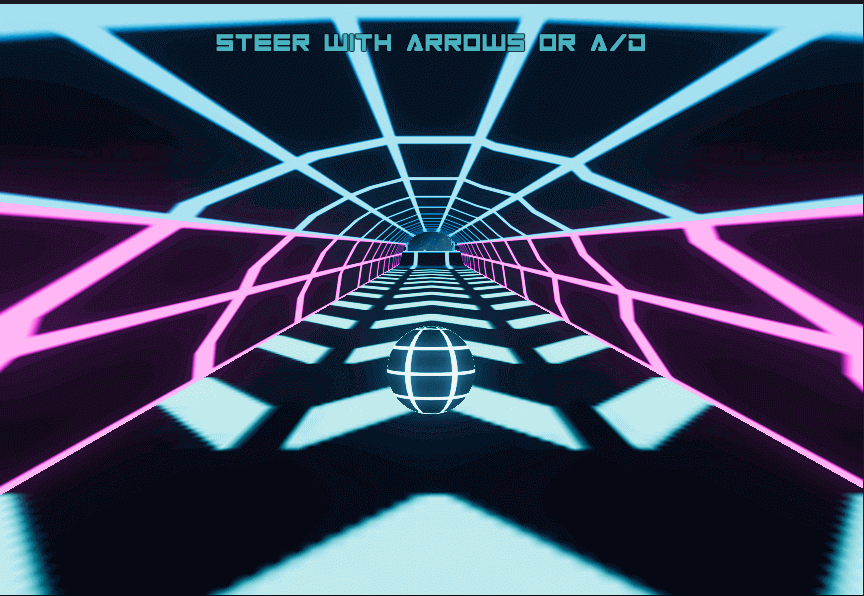
You still guide a ball moving automatically through a neon course. Collisions and falls end the attempt, so a collecting route has to work as a survival route first. Early runs are a good place to leave awkward gems alone and get used to the amount of sideways movement each press produces.
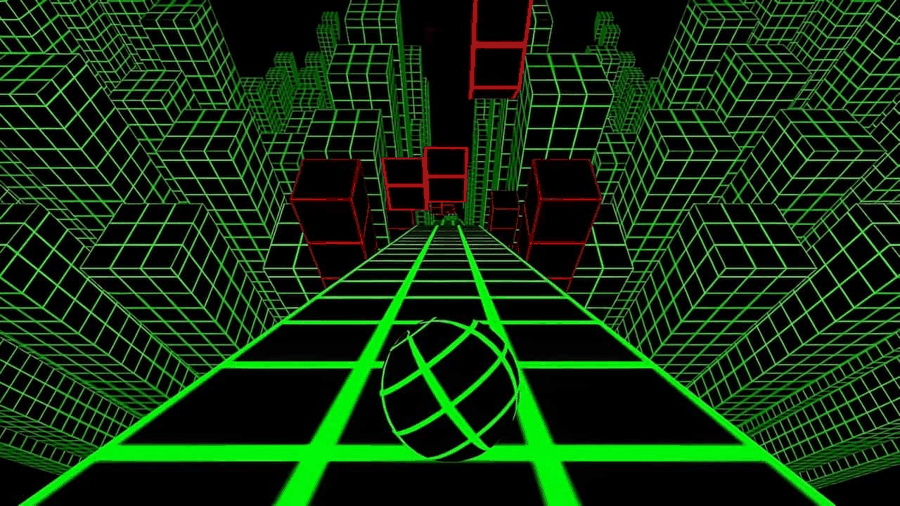
The original Slope strips that decision back to staying alive. Here the shop and its power-ups give your collecting a purpose between attempts. That is an extra layer to explore, rather than a reason to chase every shiny object on the screen.
Protection changes the cost of hitting an obstacle. It is not a replacement for landing on solid track. Read the active shield indicator rather than assuming protection lasts for the whole run.
A magnet reduces how often you need to leave your line for nearby gems. Use that breathing room to watch the course. You can still steer yourself into a bad position while it is active.
A collecting boost increases the appeal of a good pickup route. It does not make a dangerous one safe. Check the shop description and balance before spending your collected gems.
Before spending gems, check the item’s displayed cost and when its effect activates. After starting, use the active indicator to see whether the effect is still available. Keep your route readable while checking it.
If a row of gems lies along the strip you already need, approach it smoothly. Avoid zigzagging between pickups when a single line would collect most of them and keep the next platform visible.
Missing the last gem is a small cost. Arriving at the end of the row with too much sideways movement can cost the entire run.
A gem that becomes reachable only after a sharp last-second turn is an invitation to overcorrect. Keep your current route when you have already committed to a narrow section.
There will be other pickups. A survival-first attempt can still earn useful gems without treating each one as a task you must complete.
| Input | Purpose | What to watch |
|---|---|---|
| ← or A | Steer left | Release before a pickup line becomes an edge approach. |
| → or D | Steer right | Check the next platform before collecting a gem on the outside. |
| Pointer / tap in menus | Choose shop items and begin a run | Menu interaction does not establish touch steering during play. |
| Fullscreen above | Expand the player | Return to the game area to restore keyboard focus if needed. |
Compare several ordinary attempts rather than one lucky run. Did the item help you keep a route, or did you spend more time looking at the counter? A boost that distracts you may be a poor fit for your current control.
Slope 2 has its own course and collecting loop. Treat its score separately from Slope and Slope 3. Matching a number in another title is not a reliable measure of improvement.
No. Leaving a pickup is often the sensible choice when it would pull you away from a reachable landing. Gems are a resource, not a compulsory path.
Do not treat it as fall protection. Shield protection relates to obstacles; a gap still leaves the ball without a platform. Follow the item description inside the game.
No. This Slope 2 page has a yellow neon course, blue gems, and a power-up shop. The two-game comparison shows how collecting changes the route decision compared with the original green course.