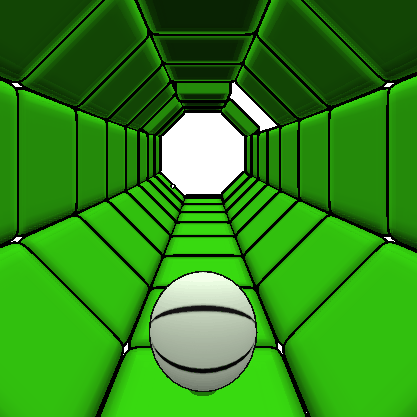
Slope Run sends a ball through platforms suspended in space. Steer sideways and jump over gaps, then choose whether you want a route with an endpoint or an open-ended survival attempt.
SPACE PLATFORMS
Slope Run Into the tunnel.
Browser play · Keyboard recommended
READY. SET. ROLL.
Slope Run ●
Ready when you are. The game opens only after Play.
⌨️Steering and jumping are separate jobs
←→Move sideways↑Jump
Forward travel keeps the course arriving, while Left and Right position the ball across the tunnel surface. Up supplies the manual jump. This is a major difference from the original Slope, where track shape creates launches and there is no manual jump key.
Before a jump, identify the surface you intend to reach. A missing panel is empty floor, not a red object to squeeze past. Moving sideways can choose a better takeoff or receiving strip, while jumping handles the break between surfaces.
Choose a mode before judging the result
🪐
Level mode
Work toward a route endpoint and use the map’s branches to choose the next course. Read the destination shown in the game instead of treating every attempt as an endless score chase. A completed section is a different kind of result from surviving longer in Infinite.
♾️
Infinite mode
Keep the run going as long as you can. Your immediate job is to find the next usable panels and jump route. The absence of a fixed endpoint makes consistent reading more useful than expecting one memorized finish sequence.
Choose the mode before deciding what a good attempt looks like. In Level mode, note the section that stopped progress along the selected route. In Infinite, note the panel sequence that ended the run. Use the map and mode labels in the game to keep those results distinct.
Read three kinds of floor
Solid panels
Use connected panels to establish the next takeoff and landing. Check how their position changes around the tunnel rather than staring into its empty center.
Temporary brown tiles
Treat unstable floor as a transition. Look for the next solid receiving surface before stepping onto it so the route does not depend on waiting there.
Missing panels
The visual continuation of the tube is not a landing area. Find an actual panel beyond the gap and align the approach with that surface.
Recognize the space-platform game
Authentic Slope Run cover art identifies the blue ball and space-tunnel setting.
The tunnel shape is a routing problem
A cylindrical scene offers floor in more than one direction, but that does not make the empty center usable. Track a connected strip and choose the next panel before committing to a jump. If the last attempt dropped beside the target, examine lateral alignment as well as jump timing.
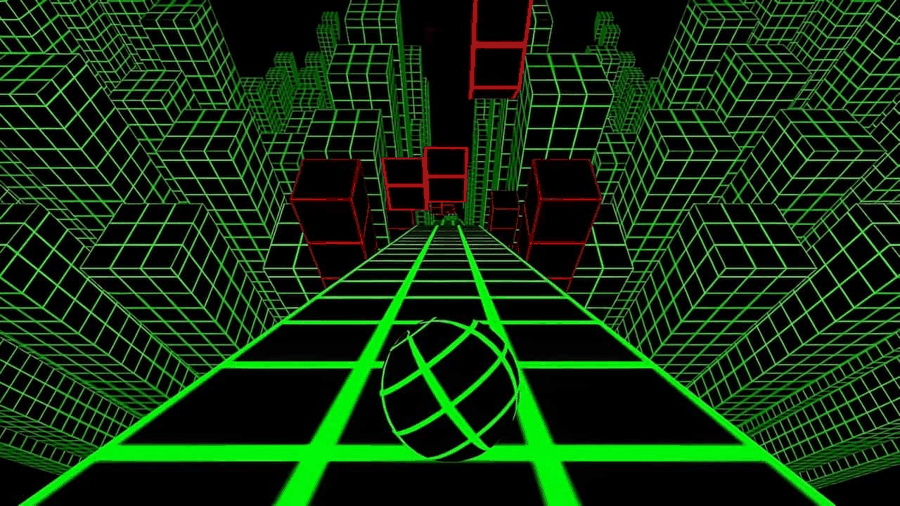
For a separate tube runner without this documented jump input, compare Slope Tunnel. The shared tunnel setting does not make the controls interchangeable.
A first useful control experiment
Establish sideways response
On a solid strip, use a modest Left or Right input and observe the new position. Let the game receive focus before judging the keys.
Add one deliberate jump
Use Up with a visible target panel in mind. Observe whether the miss was beside the floor or across the gap before changing the next approach.
Judge the selected mode
In Level mode, review progress through that route. In Infinite, review a repeatable panel-reading habit. Keep the goal attached to the mode you actually chose.
If the player never reaches a usable scene, treat that as a loading problem. A cover or a stalled start screen cannot demonstrate that jump timing is wrong.