The ball hit red
Ask whether you chose the route late or whether the ball had not fully cleared a corner. On the next attempt, change the start of the move rather than steering farther without checking the edge.
Your first run is a short experiment: get the player ready, find out how the ball responds, and notice exactly where the attempt ends. A useful first session does not need a target score.
Open Slope Unblocked on the home page and press Play once. Wait for the game scene or its start prompt, then follow that prompt. A changing loading message means the game is still opening; it is too soon to test steering.
Click inside the play area, then choose either Left/Right Arrow or A/D. Start with a small press on an open stretch. If the page scrolls instead, click the game again; the keyboard focus guide separates that problem from difficult steering.
Find the platform carrying the ball, then look ahead to where it continues. Red is a collision hazard. Empty space is not another lane. Move toward a clear patch that has enough room for the whole ball, not merely a gap that looks wide from far away.
Keep watching after the first successful dodge. The next platform may sit to one side of the current one. When the run ends, identify red contact, a side fall, or a missed landing before starting again. That single observation is more useful than repeatedly pressing restart in frustration.
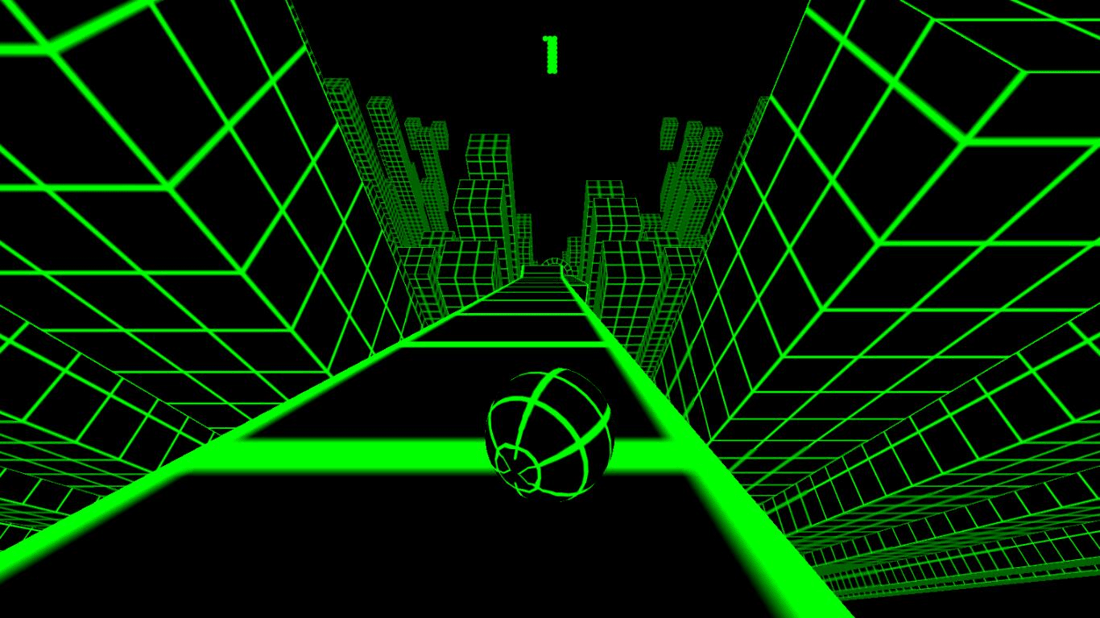
The towers make the scene feel busy, but they do not tell you where the ball can travel. Trace the connected floor beneath the ball toward the next visible section. A green line on a tower is scenery. Look for the top of the next platform—the surface the ball can actually roll onto.
Do not try to solve the entire screen at once. Find the next obstruction, the space beside it, and the section you will enter afterward. The track-reading walkthrough expands that three-part check.
Ask whether you chose the route late or whether the ball had not fully cleared a corner. On the next attempt, change the start of the move rather than steering farther without checking the edge.
Check which floor disappeared first: the side of the current platform or the platform you meant to reach. Those are different mistakes. A missed receiving platform needs an approach check, not simply a larger last-second dodge.
You are ready to move on when you can name your steering keys, recognize the playable surface, and describe one failure without guessing. It is fine if the run was short. The aim is to make the next attempt intentional.
Use the restart prompt inside the running game after the attempt ends. The page’s Reset player control reloads the entire page; reserve it for a fresh player session rather than a normal retry.
No. Open the original player when the controls and route make sense. Return to a dedicated guide after you have one specific observation to investigate, such as a missed receiving platform or a long steering hold.