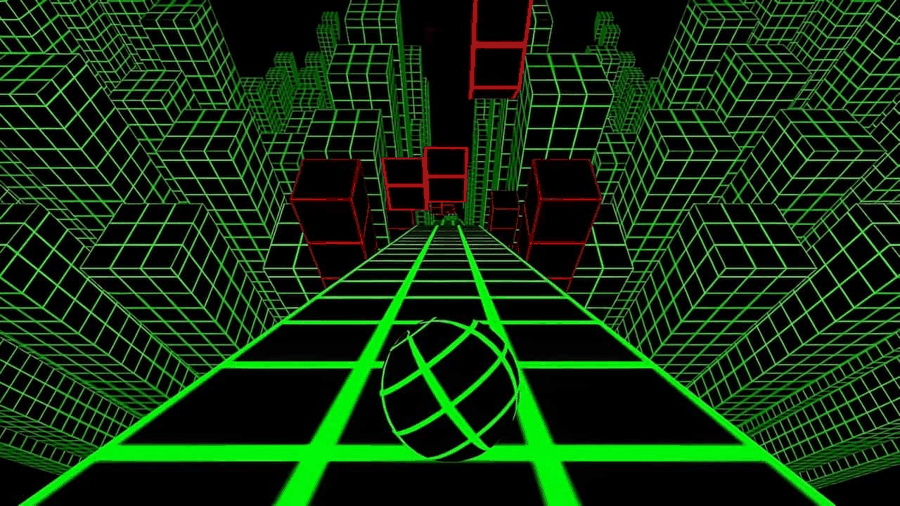
A break in the current strip
Read the adjacent panels early. Choose a neighboring connected section rather than waiting until the ball reaches the missing floor. Check what happens after the move; the new strip can have its own gap.
Slope Tunnel puts a striped ball inside a green tube with missing surface panels. Steer around the tunnel, keep a continuous route under the ball, and treat collectibles as optional detours.
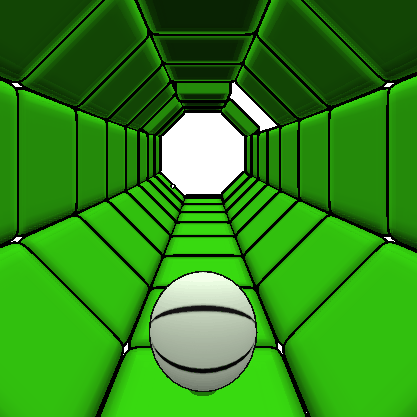
Ready when you are. The game opens only after Play.
The playable route lies on the tube’s green panels. The center is open space, and a missing panel breaks the floor even when the tunnel’s distant shape continues. Left and Right Arrow move around the surface. No separate jump or brake key is documented for this game.
This is a different title from the enclosed tunnel sections in original Slope. It is also different from Slope Run, which has a documented manual jump. Begin with the controls shown here rather than borrowing an Up or Space command from a similarly named game.
Follow the surface carrying the ball into the next visible part of the tube. Where a panel is absent, identify a connected neighboring strip before steering around the break.
Plan where the move ends as well as where it starts. A sideways route that clears one missing patch may point directly toward another. The useful target is a chain of reachable panels, not a visually empty section in the middle of the screen.
Use the cross-section to separate two choices: continue along the green surface, or leave it where a panel is missing. In play, scan along the tube to find a connected strip before the break reaches the ball.
The surrounding tube can make a gap feel like a visual pattern rather than a loss of support. Keep asking which surface the ball is on and which surface it can reach next. If you see a collectible, check that its panel belongs to the same usable route.
Read the adjacent panels early. Choose a neighboring connected section rather than waiting until the ball reaches the missing floor. Check what happens after the move; the new strip can have its own gap.
Keep the route tied to the surface, not to a permanent screen-side rule. “Always left” stops being useful when the continuation is elsewhere. Make the direction choice from the next connected panels.
Read the panels around an orb before following it. Collect along a connected strip when it fits your route; leave the orb if reaching it means crossing missing floor or arriving at another break without room to turn.
Identify the panels directly supporting the ball rather than the tube’s empty center.
Check whether the current strip continues. If it does not, find a connected lateral alternative.
Choose a route that still has floor when the steering action is finished. Review that decision after the attempt instead of judging only the nearest gap.
If the player stays dark or never reaches this scene, use the blank-player guide. A loading failure and a missed panel need different investigations.