Space is not a rescue input
Pressing Space does not create a jump in the original Slope. If the ball keeps dropping beside the next platform, review its approach. Searching for a hidden jump key distracts from the surface you actually need to reach.
The ball can leave the ground, but the original game does not give you a manual jump button. Treat a launch as part of the track and prepare the route before the current floor ends.
Locate the end of the current platform and the surface you expect to reach.
Keep judging the receiving floor rather than assuming empty space is a lane.
Check the next obstacle once the ball reaches usable ground; a landing is another transition.
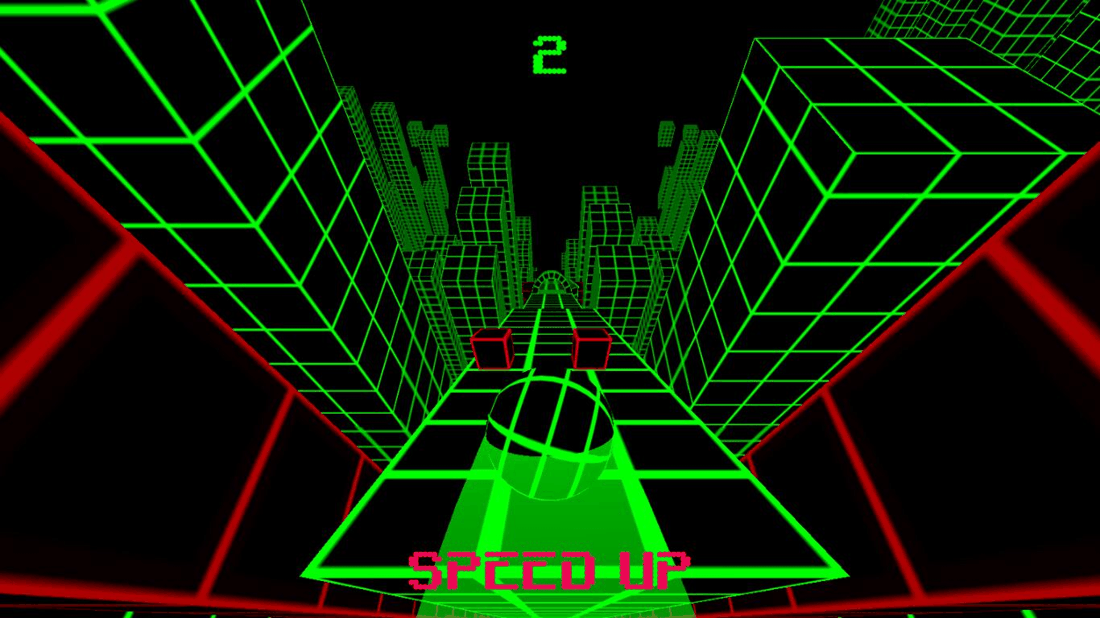
The structures beside the ball can frame an inviting exit. Look through it to the floor beyond. Is that surface centered on your approach or sitting to one side? You need a route onto its area, not merely a route through the opening in front of it.
Trace the receiving platform’s near edge and both sides. The opening between the structures is only part of the route: the ball still needs to meet the top surface beyond it. Prepare that alignment while the approach floor is visible.
Pressing Space does not create a jump in the original Slope. If the ball keeps dropping beside the next platform, review its approach. Searching for a hidden jump key distracts from the surface you actually need to reach.
A ball can clear an edge and still miss sideways. The receiving platform’s position matters as much as the visual gap. A useful review describes where the ball crossed relative to that floor.
Slope Rider includes a manual sled jump, and Slope Ball is a separate timing game. Do not import those controls into the original. The game directory keeps the identities and control families distinct.
| Moment | Observation | Why it helps |
|---|---|---|
| Before the edge | Was the receiving platform identified? | Separates a guessed route from a visible target. |
| At takeoff | Was the path aligned with that surface? | Points to the approach rather than an imaginary jump command. |
| During the drop | Did the ball miss beside or fall short of visible floor? | Makes the ending more specific without inventing physics. |
| After arrival | Did a later obstacle end the attempt? | Avoids blaming a successful landing for the next mistake. |
Do not assign a cause you could not see. On the next run, make the takeoff your observation target and accept that a later event may still end the attempt. That keeps the practice useful even without a replay.