New to Slope? Start by making the controls predictable, then learn to spot the next piece of floor. Add harder route decisions only when you can explain what happened on the simpler stretch. You can move through this ladder at your own pace.
🪜A learning ladder with observable steps
⌨️
1 · Make input predictable
First, confirm that the running game has focus. On a wide section, test one short left press and one short right press. You are learning the response, not trying to cross the full road. Repeat with the same keys before judging your handling.
🧩
2 · Follow the floor
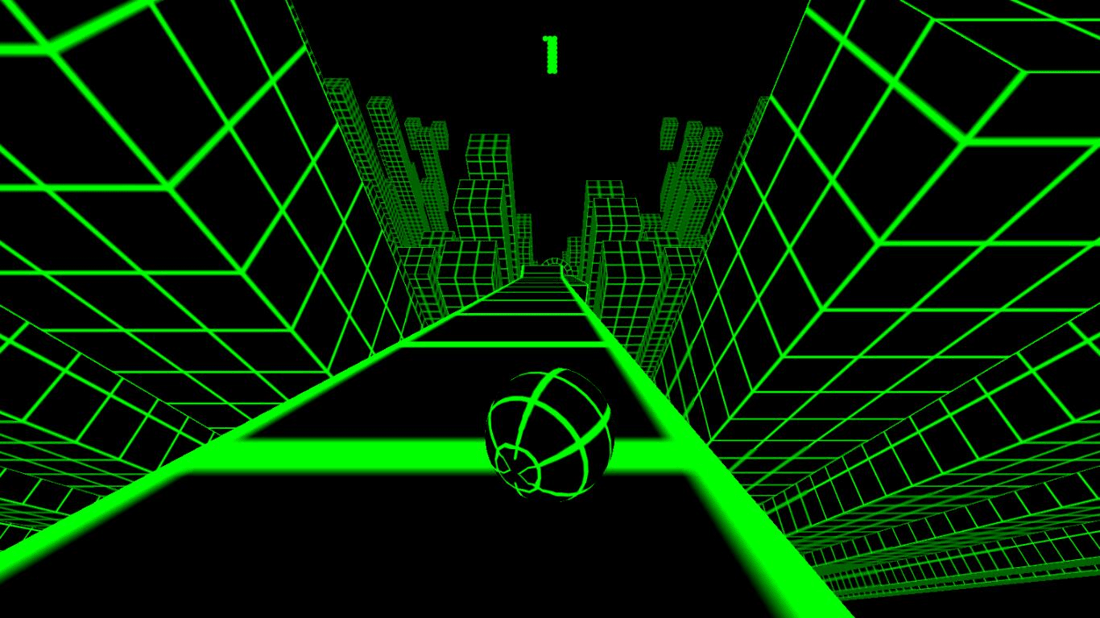
Once the input makes sense, trace the current platform into the next one. Let scenery stay in the background. Your checkpoint is being able to point to the receiving surface before reaching the end of the piece beneath the ball.
🎯
3 · Separate two kinds of danger
Red contact and leaving the track both end a run, but the correction differs. Notice whether the ball touched a block first or cleared it and then fell. Learn the difference before collecting a long list of tips.
🔭
4 · Plan the exit
After a successful dodge, look for the next decision. A path around the first block may lead toward a narrow connector. Start judging a route by where it leaves the ball, not only by whether it clears the nearest object.
Study one ordinary stretch
The route is the green floor below the ball, not the surrounding wireframe towers.
Start with an ordinary section
An open stretch lets you learn something a crowded tunnel can hide: how much space your usual press uses. Leave a visible margin on either side and watch what happens after you release. You do not need to wait for a dramatic section to practice control.
The first-session walkthrough covers launch order if you have not reached this point yet. Use the control reference when you need the inputs rather than another lesson.
Three small sessions
Practice goals without score thresholds
Session
Pay attention to
Useful evidence
Control session
One steering pair and short inputs
You can tell an early move from a late correction.
Route session
Where the next usable floor begins
You notice a side-shifted receiving platform before the gap.
Recovery session
The event immediately before failure
You choose one change for the next attempt and can explain why.
Use the table to choose your next task, not to lock yourself into a schedule. If route reading feels comfortable but narrow entries remain messy, go back to control on a wider approach. If the keys stop responding, pause the lesson and check focus before judging your progress.
Read the route panels. Practice connecting the current floor, the obstruction, and the next platform before steering.
Every failure feels different.
Use the failure case files to record the first event. A quick description such as “cleared red, then side fall” is enough to reveal a pattern over several attempts.
Stop the session when you are no longer noticing the result of your own changes. More restarts are not automatically more practice. The practice planner gives you a compact way to keep one observation and one next task.