Watching the ball constantly can leave the next route a surprise. Looking far ahead all the time can miss a red corner beside you. Useful attention moves between the next decision and the clearance that matters now.
🔭Use moving questions, not a fixed stare
Attention sketch: reading ahead and checking nearby clearance are different jobs, chosen for the current feature.
Ask “Where can I go next?” while the nearby route is stable. Return to “Have I cleared this?” during a close pass. Then look ahead again. The diagram suggests those jobs; it is not a set of permanent zones or a required eye position on every screen.
The section decides the balance. A long open approach may let you read several connected surfaces. An enclosed passage may demand a closer check. The goal is to notice when your attention is stuck on a problem the ball has already passed.
Three signs that attention has narrowed too far
🟥
You keep watching the red block behind the move
Once the required clearance is established, ask what the dodge leaves ahead. Continuing to stare at the old obstacle can delay the next route decision even while the current input keeps carrying the ball across.
🧩
The next platform appears as a surprise
You may be inspecting the ball’s position for too long on a stable stretch. Briefly trace the receiving floor before the current edge arrives, then return to the nearby check.
🏙️
You notice scenery before the floor
The green architecture is visually strong, but it does not provide the route. Find the connected floor grid and let it organize the rest of the view. Use the scene-reading panels if those layers blend together.
Let the corridor organize a busy scene
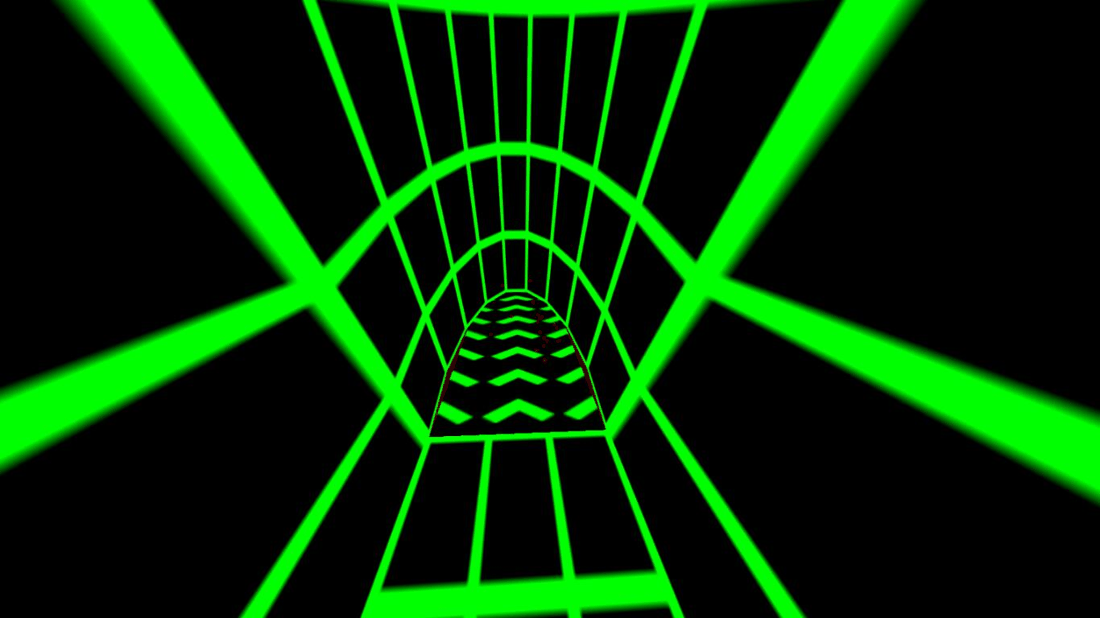
Floor chevrons lead through the tunnel toward the far opening.
Shift the question as the view changes
Inside the tunnel, the floor and side clearance define the immediate problem. As the exit opens, switch part of your attention to the receiving surface. You are not abandoning the nearby check; you are preparing the next one before it becomes urgent.
Remove a distraction that you can control
Choose the player size before a demanding section rather than changing it during a dodge.
Close an unnecessary page or notification source if it repeatedly pulls your attention away.
Keep the score as a result check; do not let watching the number replace reading the next floor.
Use one practice task so several remembered tips do not compete for the same moment.
Choose one distraction to remove before trying again. Keep the player view fixed and use one route cue, such as the next platform’s near edge. If the picture visibly pauses, handle the performance symptom before judging whether your attention cue helped.
🎯Reset the task between attempts
After the run, name the feature that needed attention and the moment you stopped reading it. Take a breath, choose one cue, and begin again when you can state it plainly. A cue such as “find the exit floor” is easier to use than “never get distracted.”