Centered but still moving across
The ball can reach the center at the instant you enter while its path still points toward a wall. Check the trend before entry. A position that looks neat in one frame is not the same as a settled approach.
A tunnel turns a wide view into a small corridor. The most useful adjustment often happens before entry, while the approach still gives you room to settle the ball’s path.
Locate the opening and the floor leading into it. Make the larger alignment move before the corridor becomes tight.
Watch the usable passage and nearby red surfaces. Do not assume the route is clear because the entrance was open.
Find the next platform as it becomes visible. Leaving the tunnel is a transition, not the end of the hazard.
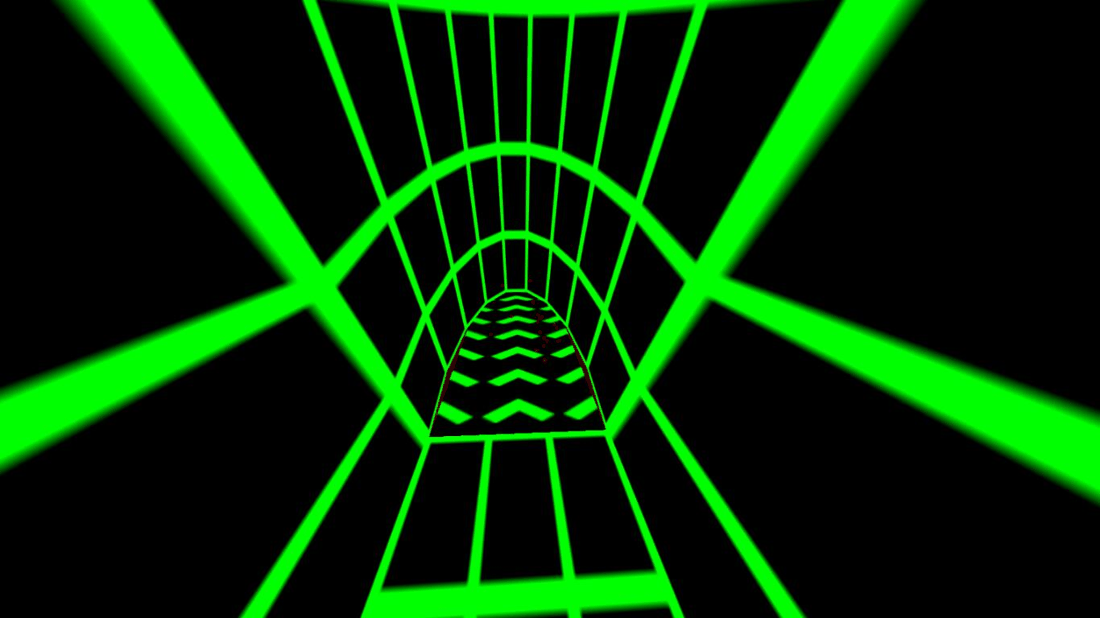
The enclosing lines can pull your attention toward the walls and roof. Keep the ball’s route tied to the floor beneath it. Look along that floor to the next visible opening, while checking the red side surfaces that constrain nearby clearance.
Follow the floor chevrons toward the far opening. As the corridor opens out, locate the receiving platform and check whether it sits on the same line. Keep the exit in view while maintaining clearance from the nearby red sides.
The ball can reach the center at the instant you enter while its path still points toward a wall. Check the trend before entry. A position that looks neat in one frame is not the same as a settled approach.
A modest offset does not automatically require a large correction. Judge the visible clearance and the next section. Trying to force the ball to screen center can create a wallward move that was not there before.
The direction of travel matters alongside present position. Start with the position-and-carry matrix. Do not wait for the ball to reach the wall before deciding the approach is unfinished.
No. Identify the receiving floor while leaving the corridor. The landing guide explains how to separate the visible opening from the surface you can actually reach.
For a few attempts, judge only whether you arrived with room on both sides and without a large last-second reversal. That gives you a clear entry observation even if a later obstacle ends the run. Do not count a distant crash as evidence that the entry was wrong.
If you repeatedly clip the same side immediately inside, review the approach on the wider floor. If entry is clean but the run fails after the corridor, switch the task to reading the exit. Keep those two lessons separate.