How speed changes a Slope run
A route that was easy to correct late in one section can demand an earlier decision in another. Faster movement leaves less time between recognizing the obstacle and reaching it; it does not add new steering keys.
The same task, with less room for delay
You can identify the opening, compare the side margins, and start a move before the obstacle is close.
The route still needs the same checks, but there is less time to hesitate between seeing the space and choosing it.
A clear side can remain visible even when the ball no longer has enough approach room to reach it.
Use the three stages to locate where a move becomes late. If you recognize the route only in the last stage, aim to read the next surface earlier. Making a larger dodge after the decision is already late may simply use more of the outside floor.
A faster section still needs a receiving route
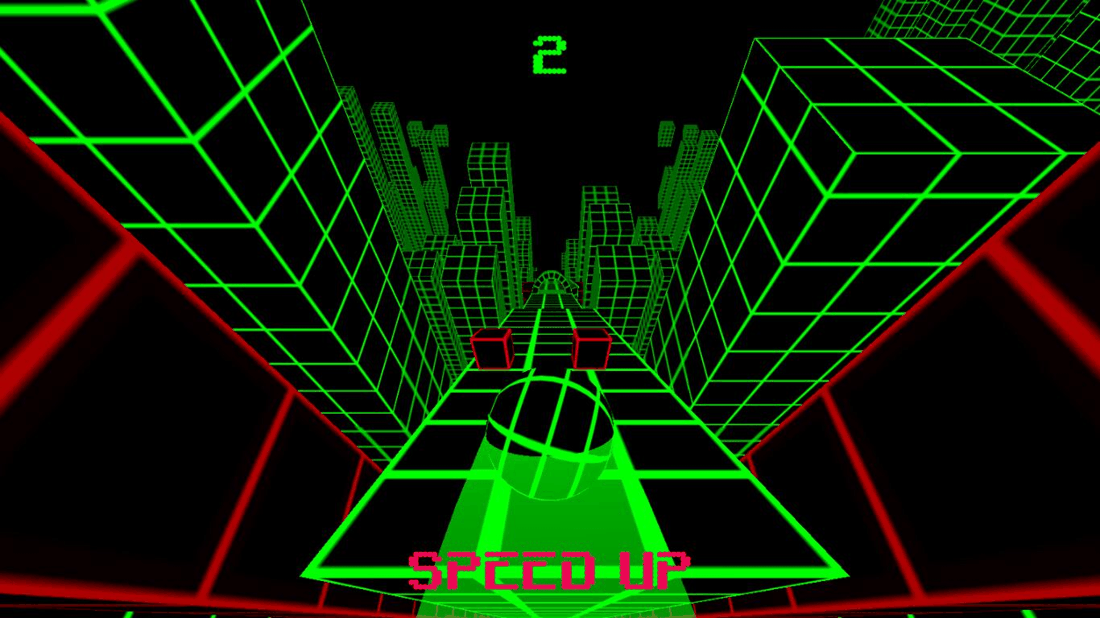
Read beyond the cue
A speed message can make you watch the ball more closely, just when reading the next surface becomes more valuable. Locate the floor beyond the exit and the first obstruction on that route. The cue does not tell you which side to choose.
The attention guide explains how to alternate an ahead check with a nearby clearance check. Staring only at the nearest block leaves the following decision late.
What to change first
Move the reading earlier
Try noticing the next usable surface before the nearest obstacle becomes urgent. This gives you information sooner without requiring a larger dodge.
Remove indecisive reversals
If the chosen route remains clear, let one purposeful move finish. An unnecessary second direction change spends both time and platform width.
Keep the release in the plan
A faster run can turn a long hold into an edge fall. Watch when the ball has enough clearance instead of holding until the block has vanished from attention.
Do not replace all of this with “tap faster.” Rapid inputs can still be late, oversized, or aimed at the wrong platform. The sequence of decisions is usually the more useful thing to review.
Fast gameplay and poor performance feel different
| What you observe | Guide to use | Reason |
|---|---|---|
| Smooth motion, but obstacles arrive sooner | This pace guide | The decision window is becoming harder to use. |
| Visible pauses or uneven motion | Performance checks | Missing frames can hide the progress of a move. |
| Keys move the page or do nothing | Keyboard checks | The game may not be receiving the input at all. |
For a speed practice attempt, choose one earlier landmark for reading the next section and note whether it gave you a clearer choice. Keep the rest of your steering routine familiar. If the picture stutters, diagnose that separately before judging the experiment.