Position and momentum in Slope
A ball can be near the middle of a platform and still be heading for its edge. The position you see now and the direction it is traveling are two different clues. Learning to read both makes corrections less frantic.
Watch what changes, not just where the ball is
Use a straight edge beside the ball as a reference. If the visible margin keeps shrinking, the path is still taking the ball toward that side. A release ends your key press; it does not tell you that all lateral motion has disappeared. Watch the result before deciding the move is finished.
“Carry” means the sideways travel you notice after changing an input. Watch one edge over several moments: a shrinking margin means the path is still closing on that side. An opening margin tells a different story, even if the ball remains close to the boundary.
Read position and direction together
| Position | Observed trend | What to check next |
|---|---|---|
| Near the middle | Moving toward an edge | Do not assume the present margin will last. |
| Near an edge | Moving back toward usable floor | Avoid adding an oversized second reversal. |
| Beside a red block | Still crossing its corner | Keep watching clearance before planning the next move. |
| Approaching a gap | Moving across the receiving surface | Judge where the path will meet the next platform. |
Read the table during movement: first locate the ball, then watch how that position changes against the edge. If the ball is already moving back toward usable floor, a second large reversal can send it across the platform again.
A near-edge position is a question, not a diagnosis
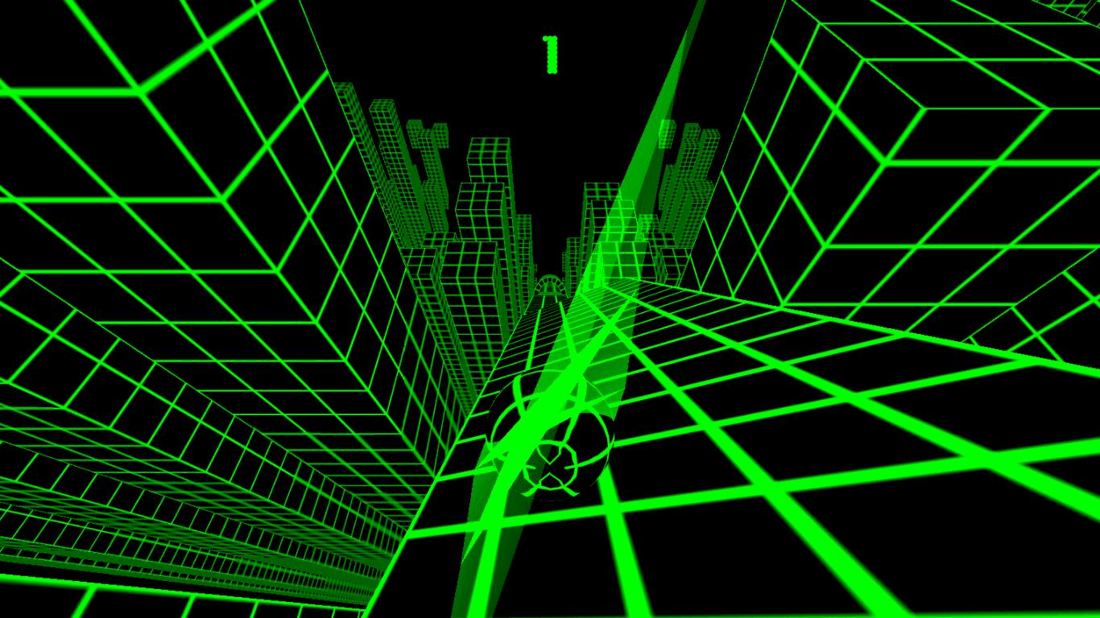
What the frame can tell you
Notice the amount of floor left beside the ball. That is useful evidence of position. What the frame cannot show is whether the ball is approaching the side, moving away, or between changes of direction. Do not label the run “unrecoverable” from this view alone.
In a live attempt, leave yourself room to observe that trend. On a narrow platform, the same uncertainty is harder to tolerate because less floor remains for the correction.
A recovery that does not become a weave
Identify the shrinking margin
Look at the relevant platform edge, not the center of the screen. Decide which side the ball is approaching before choosing an input.
Make one measured correction
Use enough opposite steering to change the path, then observe again. Holding until the ball reaches the middle may spend more space than the recovery needs.
Settle before the next feature
A tunnel or small connector is easier to enter when the ball is already following a usable line. Try to finish large corrections on the wider approach.