Before the narrow part
Locate its beginning and the next surface beyond it. Use wider ground for the main alignment if that route is visible. Keep the move tied to the platform, not to a general instruction to stay left or right.
A narrow section reduces the space available for changing your mind. The aim is to arrive on a usable path with spare floor beside the ball, rather than trying to repair every approach once the width has disappeared.
Think of the visible space beside the ball as room for a future correction. Steering across an open platform uses some of that room. On a narrow piece, the same move can leave very little to work with. This is why a correction that felt harmless earlier can become expensive later.
The two strips show why the same ball position can leave very different room outside it. On the narrower strip, a small move uses a larger share of the remaining floor. Judge margin from the actual edges, then check where the next piece begins.
| Approach | Possible benefit | Watch out for |
|---|---|---|
| Near the local middle | Visible room on both sides | The next piece may not share that middle. |
| Offset toward the next platform | Less crossing at the transition | The current edge may leave little recovery room. |
| Large correction after entry | May rescue a poor alignment | Can use the entire width before the path changes. |
| Earlier alignment on wide floor | More room to observe the result | Only commit once the receiving route is readable. |
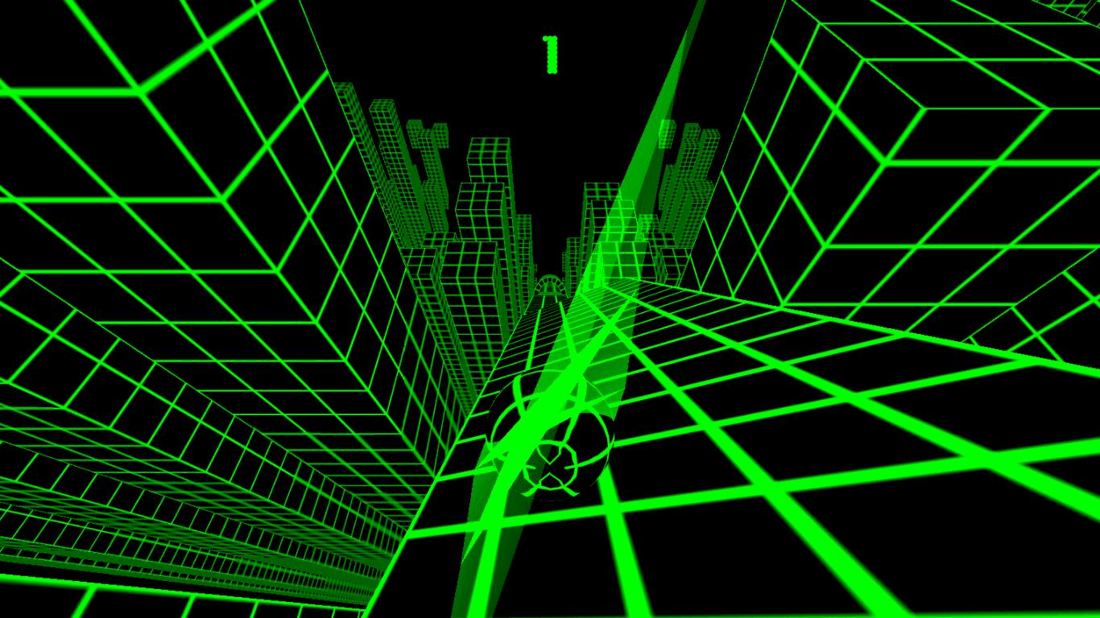
The camera’s center and the middle of a sloping or offset platform need not line up. Compare the ball with the floor’s two boundaries. A move toward screen center can still reduce your useful margin if the platform itself is elsewhere.
If the ball is already returning toward usable floor, another large correction can start a weave. Use direction as well as position before deciding that any near-edge view requires an immediate reversal.
Locate its beginning and the next surface beyond it. Use wider ground for the main alignment if that route is visible. Keep the move tied to the platform, not to a general instruction to stay left or right.
Prioritize the nearest boundary that threatens the run. Make the smallest useful adjustment for the observed path, then check again. Repeated alternating taps can consume the little margin you hoped to save.
After an attempt, write which margin disappeared first: left side, right side, or the floor at the next transition. Add whether the ball was still moving across at that moment. Those two details are enough to choose a focused next drill.
If the problem begins around a block, use clearance and exit planning. If the current piece ends before the next one, use the receiving-platform check. For a repeated long hold, return to release timing. The route diagnosis should decide the lesson.