Pass toward the middle
This often leaves useful platform beside the ball, but it can lead toward another block. Check what occupies the middle beyond the nearest obstacle before treating an inward dodge as automatically safer.
The empty lane beyond a block can look safe before the ball is fully inside it. Give clearance its own check: the whole ball needs to pass the corner while the floor still supports the route.
A route is not a line drawn through the ball’s center. The ball occupies space, and a red corner can remain beside it during a diagonal pass. Begin moving while there is enough approach distance to get the full ball across. Then check the outside margin before extending the dodge.
Check the red corner as the ball draws alongside it. A lane can look open ahead while part of the ball is still beside the obstacle. Leave a visible cushion where the platform allows it, then check the floor outside the pass.
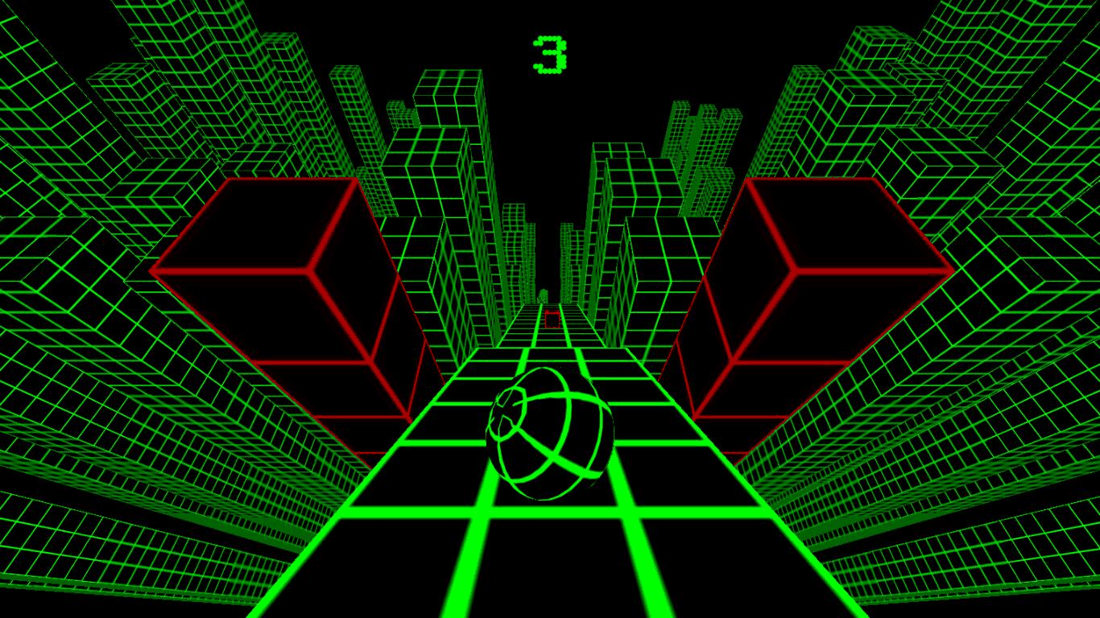
Read the red edges nearest the ball, then trace the green floor through the opening. A narrow visible slit is not enough by itself: the ball must reach it in time and emerge above usable floor. Perspective makes a distant gap look different from the same gap near the ball.
If the route is crowded on both sides, avoid an unnecessary reversal while crossing the block’s depth. Finish one clear move before asking for the next. The carry guide explains why position alone does not show that a move has settled.
This often leaves useful platform beside the ball, but it can lead toward another block. Check what occupies the middle beyond the nearest obstacle before treating an inward dodge as automatically safer.
The route may be open, but the outside floor is a second limit. Decide how much movement the pass actually requires. A long hold that clears red and then leaves the platform has solved only half the problem.
Neither side is a permanent rule. The next connector, tunnel, or gap decides which exit is useful. The conditional tips board compares this with the advice to stay centered.
On the next comparable section, change the start of the move first if you were late. If you cleared the block and fell, move to margin management instead of repeatedly adding more steering away from red.
For practice, choose one observation: “Did the entire ball clear the corner before I released?” The answer may be hard to see on a fast run. A short, ordinary attempt can teach more than guessing at the end of a personal-best chase.