Red contact
The ball reaches a red surface or corner before it finishes passing. The key question is clearance: was the chosen side blocked, or did the move begin too late to get the whole ball into the opening?
Not every game-over scene points to the nearest red block. This atlas classifies the hazard that first broke your route so you can choose the right guide and a sensible change.
The ball reaches a red surface or corner before it finishes passing. The key question is clearance: was the chosen side blocked, or did the move begin too late to get the whole ball into the opening?
The ball leaves the platform laterally. This can follow a successful dodge, so hitting nothing is not proof that the route was controlled. Look for a shrinking margin after the pass.
The current floor ends and the ball does not reach the receiving platform. Examine alignment before the takeoff. The original has no manual jump key to repair an approach that misses usable ground.
A tunnel restricts the room to move. An entrance that looks open can still lead to a poor line inside. Separate entry alignment, wall clearance, and the route beyond the exit.
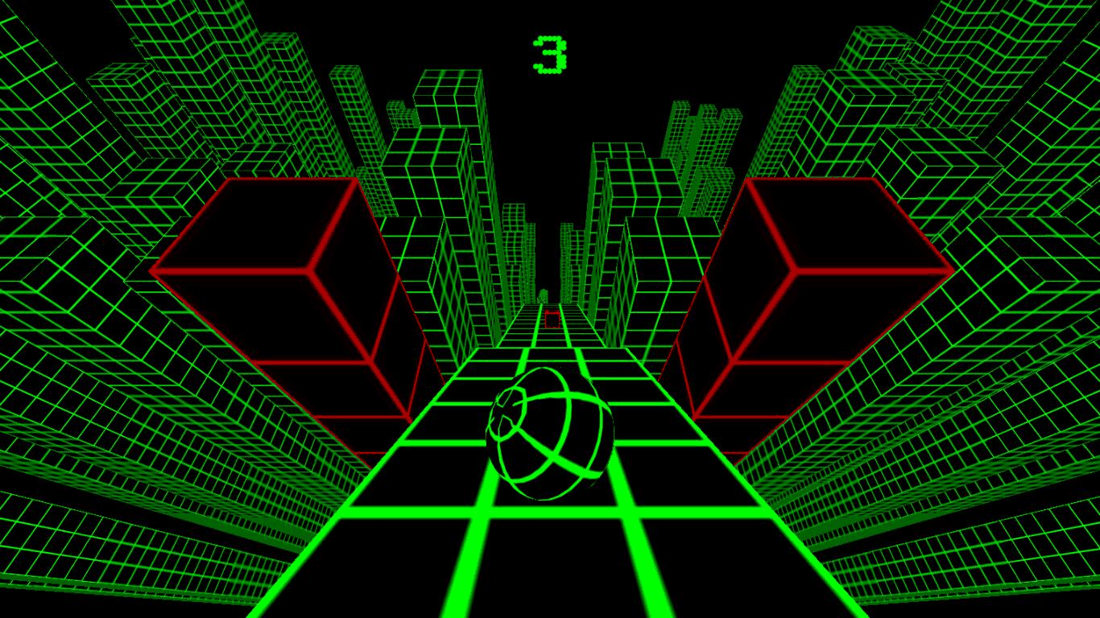
The visible opening between red blocks invites a clearance judgment. Check the ball’s width and the floor continuing through the space. Even if that opening is usable, the route is incomplete until you know what comes after it.
Use the atlas to name the earliest hazard you saw. Red contact before a fall belongs in the collision category; clearing red and then leaving the side belongs in the edge category. The failure case files help trace the earlier decision after that first classification.
| Observed ending | Likely category to examine | Next question |
|---|---|---|
| Touched a red face or corner | Obstacle clearance | Was the whole ball across before the pass? |
| Cleared red, then left the side | Margin and steering duration | Did the input continue after it had done its job? |
| Dropped toward empty space beyond an edge | Receiving platform | Where did the approach line meet the next floor? |
| Entered a tunnel, then lost the corridor | Alignment or enclosed clearance | Was the ball still moving sideways at entry? |
If the ending was too quick to classify, watch one category on the next attempt: contact with red, a side boundary, or the receiving floor. Leave the entry unclassified until you actually see the first event. That keeps a missed landing from becoming a steering diagnosis by guesswork.
A wide block followed by a narrow piece asks for two linked decisions: how to pass, and how to arrive. A tunnel followed by an offset platform asks you to keep reading while leaving the corridor. Solving the first object with the largest possible dodge can make the second task much harder.
Choose a route with enough room for the transition. If the route itself makes sense but you arrive too late, use the pace guide. If the move grows into a large weave, work on press and release first.